Can you refreeze breast milk?
Why refreezing is off the table
Freezing pauses bacterial growth; it does not reset it. Every hour milk spends thawed, normal bacteria multiply a little. Refreeze it and you lock that progress in, then add more on the second thaw. Thawing also breaks down some of the milk's cell structure, so a second freeze-thaw cycle degrades quality on top of the safety question.
What counts as "fully thawed"?
Liquid all the way through, no slush, no crystals. That is the line. A bag that is slushy with visible ice crystals throughout has technically never finished thawing, and most guidance treats it as still frozen: it can go back in the freezer, though quality is best if you just finish thawing and use it.
The situations that make moms ask this
- Thawed too many bags for daycare: keep the extras in the fridge and use them within 24 hours, tomorrow counts.
- Cooler bag came home cold but thawed: fridge, 24-hour clock, feed it first.
- Power outage: ice crystals still visible means refreeze is fine; fully liquid means the 24-hour fridge rule applies.
- Baby refused the bottle: once a baby has drunk from a bottle, that milk is on a 2-hour clock and cannot be saved or refrozen.
The real fix: thaw less, more precisely
Almost every refreezing dilemma starts with over-thawing. Thaw one bag at a time, oldest first, in the smallest useful size (2 to 4 oz), and you will almost never face the question again.
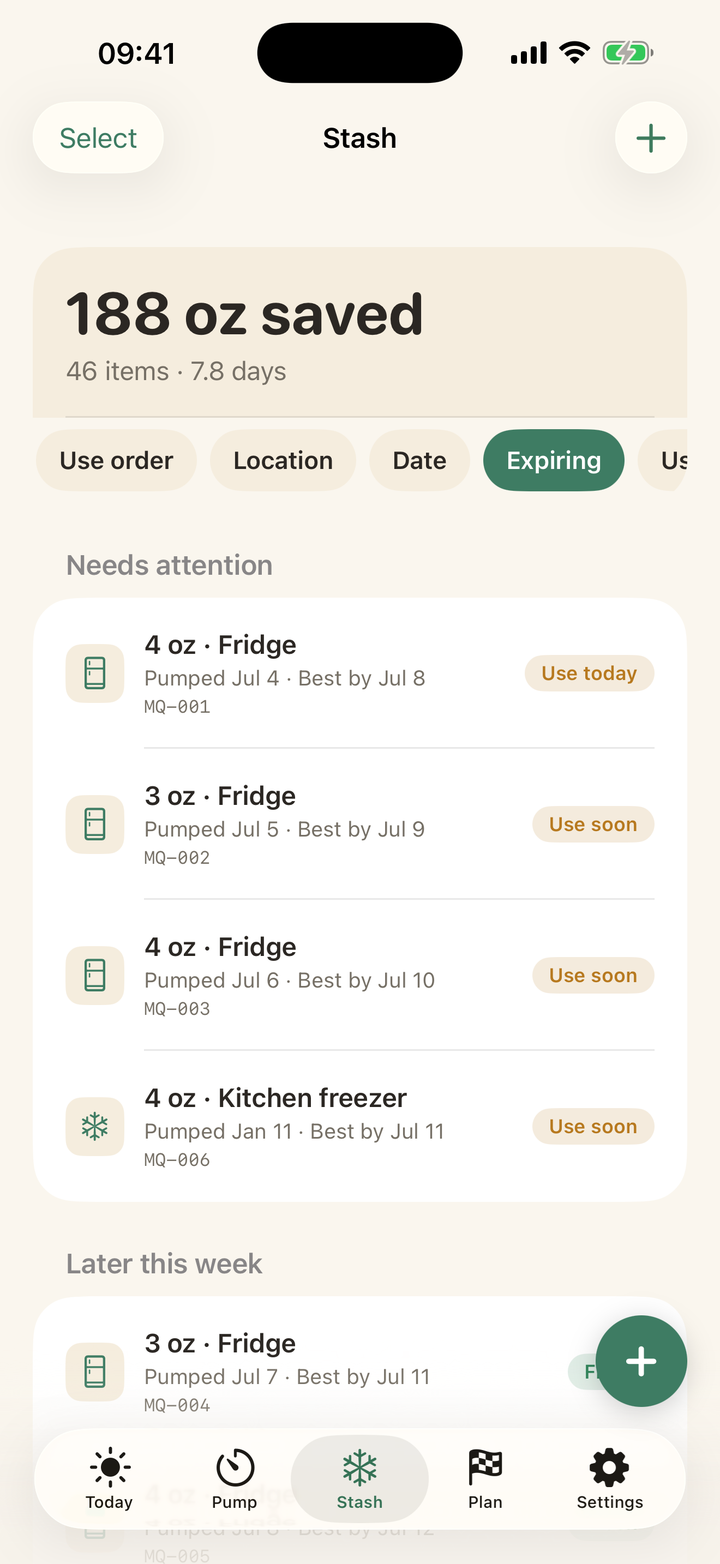
In Milk First
Every bag and bottle you add gets its best-by and use-by dates computed automatically from these exact rules, the oldest safe milk sits on top of the Use next queue, and a warning arrives the day before anything expires, while you can still act.
Milk First tracks thawed bags on their own 24-hour clock and tells you exactly how many to thaw, so you stop over-thawing in the first place.
Get Milk First free