How to thaw frozen breast milk, the safe way
Method 1: overnight in the fridge (the planner's move)
Move tomorrow's oldest bag from freezer to fridge before bed. By morning it is thawed and the 24-hour clock starts from the moment it finishes thawing. This is the gentlest method and the easiest to build into a routine: one bag down every night, oldest first.
Method 2: bowl of warm water (the 20-minute move)
Set the sealed bag in a bowl of warm, not hot, tap water. Swap the water once as it cools. Most 3 to 4 oz flat-frozen bags thaw in 15 to 25 minutes. Once thawed and warmed, the milk should be used within 2 hours.
Method 3: lukewarm running water (the baby-is-crying move)
Hold the sealed bag under lukewarm running water, massaging gently. Fastest option, uses the most water. Same rule after: feed within 2 hours.
Why never the microwave
Microwaves heat unevenly and create pockets hot enough to scald a baby's mouth even when the bag feels lukewarm outside. High heat also breaks down some of the protective components you worked hard to make. Every major health body says the same thing: not the microwave, not even for a few seconds on low.
After thawing: the two clocks
- Fully thawed in the fridge: use within 24 hours, counted from when it finished thawing, not when you took it out of the freezer.
- Warmed or at room temperature: use within 2 hours.
- Refreezing: no, once fully thawed. See can you refreeze breast milk?
Thawed milk often separates into layers; swirl gently to remix. If it smells soapy, that is usually lipase, not spoilage: read about high-lipase milk.
In Milk First
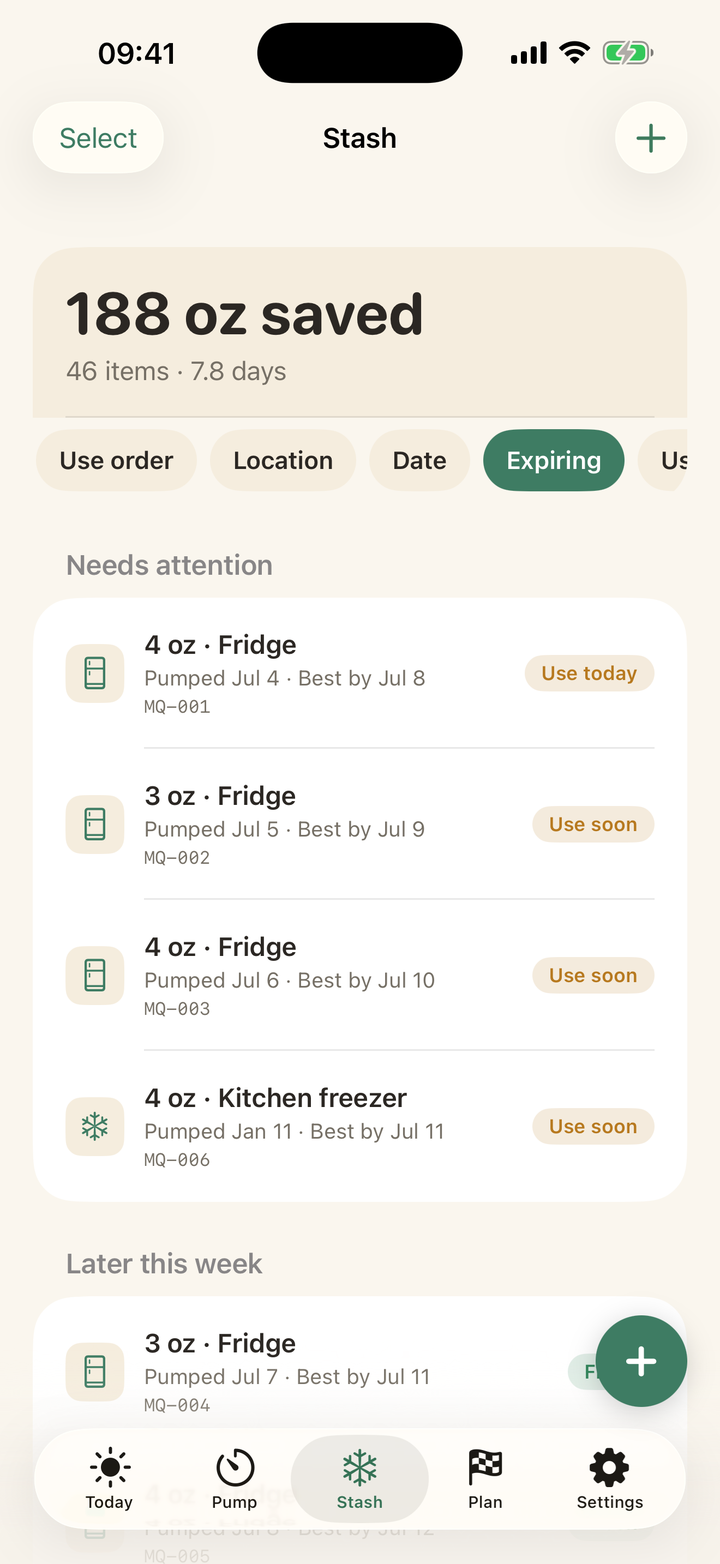
Every bag and bottle you add gets its best-by and use-by dates computed automatically from these exact rules, the oldest safe milk sits on top of the Use next queue, and a warning arrives the day before anything expires, while you can still act.
Milk First starts the 24-hour clock automatically when you move a bag from freezer to fridge, and tells you which bag to thaw first. One less thing to hold in your head.
Get Milk First free