Exclusively pumping schedules that real humans can keep
Weeks 0 to 6: building the foundation
Supply is calibrated in these weeks by how often milk leaves the breast. The classic pattern is 8 to 12 sessions per 24 hours, 15 to 20 minutes each, including at least one pump between 1 and 5 AM when prolactin peaks. A sample rhythm: 6a, 9a, 12p, 3p, 6p, 9p, 12a, 3a. Brutal? Yes. Temporary? Also yes.
Months 2 to 3: finding a sustainable rhythm
Once supply regulates, many EP moms move to 5 to 7 pumps: for example 6a, 10a, 2p, 6p, 10p, and one overnight if output still needs it. Watch your 24-hour total for a week whenever you change the schedule. Stable total means the new rhythm is working.
Months 4 to 6: dropping pumps without dropping ounces
Drop one session at a time, and give each drop 5 to 7 days before judging. The gentle method: push two adjacent pumps closer together, then merge them. Many moms find they hold output at 4 to 5 pumps by stretching sessions slightly longer. If total output dips more than you can afford, add the pump back; nothing is lost by trying.
Months 6 to 12: the cruise and the wind-down
With solids on board, many babies need less milk from month 9 onward. EP moms commonly sit at 3 to 4 pumps, then plan the wind-down toward their goal date. That final countdown is exactly the math our Finish Line guide walks through.
Three rules that survive every schedule
- Judge weeks, not sessions. Output swings daily with sleep, stress, and hydration. Weekly totals tell the truth.
- Protect the morning pump. For most moms it is the biggest of the day. It is the last one to touch.
- Log it or lose it. Schedule changes only work when you can compare before and after honestly.
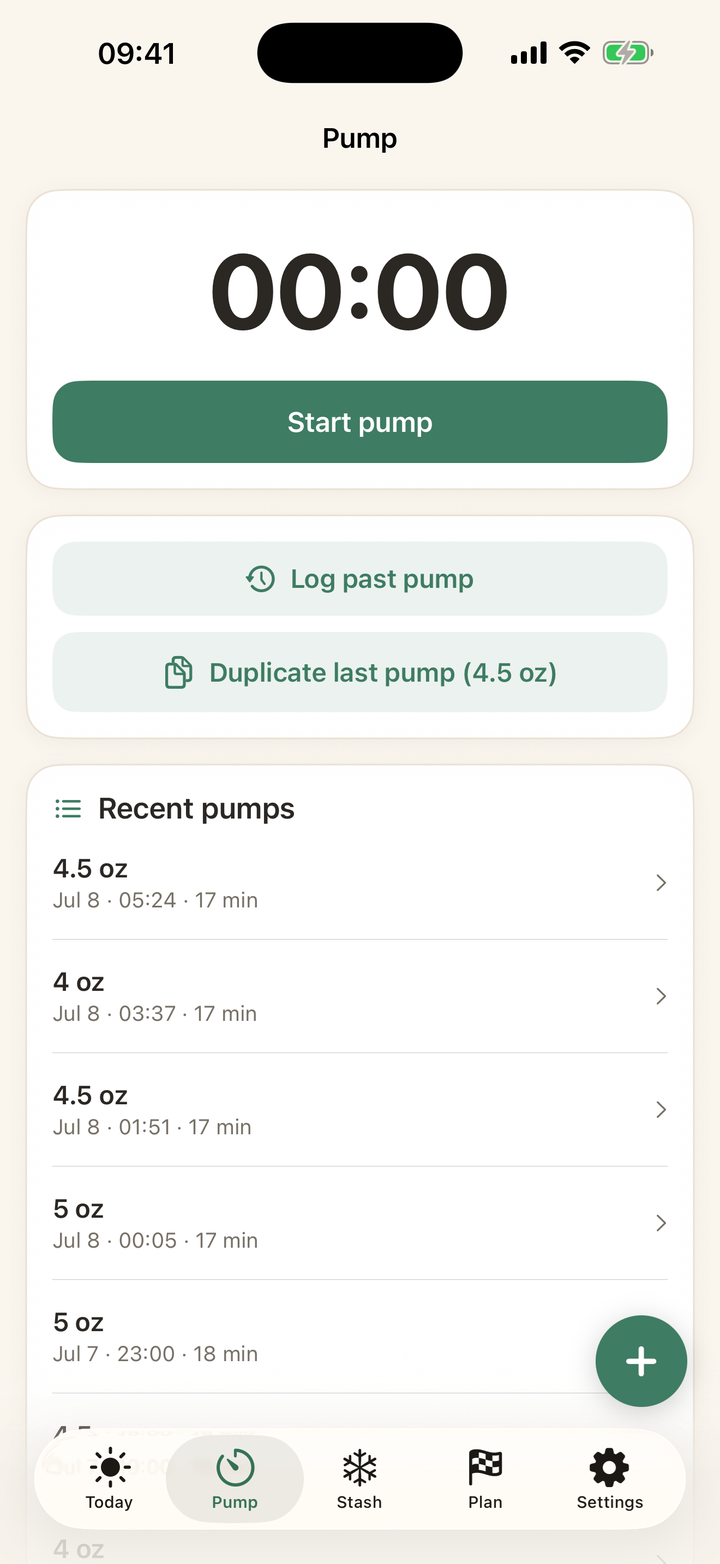
In Milk First
Log any session in two taps, backdate the ones you forgot, and let the 7-day average chart answer supply questions with real numbers. Every pump files its milk into the stash automatically.
Milk First logs each pump in seconds, shows your 7-day average, and files every ounce into the stash automatically, so schedule experiments have real data behind them.
Get Milk First free