Home › Guides › Building a stash
planningBuild a freezer stash without pumping yourself into the ground
The math that kills the panic
Once you are back at work, each workday's pumping covers the next workday's bottles. The freezer stash only has to bridge day one and cover hiccups: a spilled bottle, a low-output day, a pump part that dies at the office. That is why the real target is measured in days, not hundreds of ounces. A 500 oz deep-freezer wall looks glorious on Instagram and is genuinely unnecessary for most families.
The 4-week plan
- Weeks 4 and 3 before: add one 10 to 15 minute pump after the first morning feed, when supply peaks. Expect just 1 to 3 oz; that is 15 to 40 oz over two weeks, quietly.
- Week 2: keep the morning add-on. Introduce one bottle feed so your baby practices with whoever will do daycare drop-off. Freeze what you would have fed.
- Week 1: you likely have your cushion already. Do a dry run: pack the cooler bag, label bottles, drive the route. Portion the stash into 2 to 4 oz bags if you have not.
- Day one: send bottles from the fridge, pump at work on your baby's feeding rhythm, and tonight's pumping becomes tomorrow's bottles. The freezer stays your safety net, not your daily source.
The oversupply trap, gently
Pumping far beyond your baby's needs to grow the wall can backfire: oversupply invites clogged ducts and mastitis, and enormous stashes routinely age out at 12 months and get poured away, which breaks hearts. Build the cushion, then stop building. Your future self does not need 400 oz; she needs 60 good ounces that never expire unused.
Guard what you build
A stash only counts if it is alive: dated bags, oldest in front, rotated into use so nothing crosses 6 months, topped back up from surplus days. A smaller, rotating stash beats a frozen museum every time.
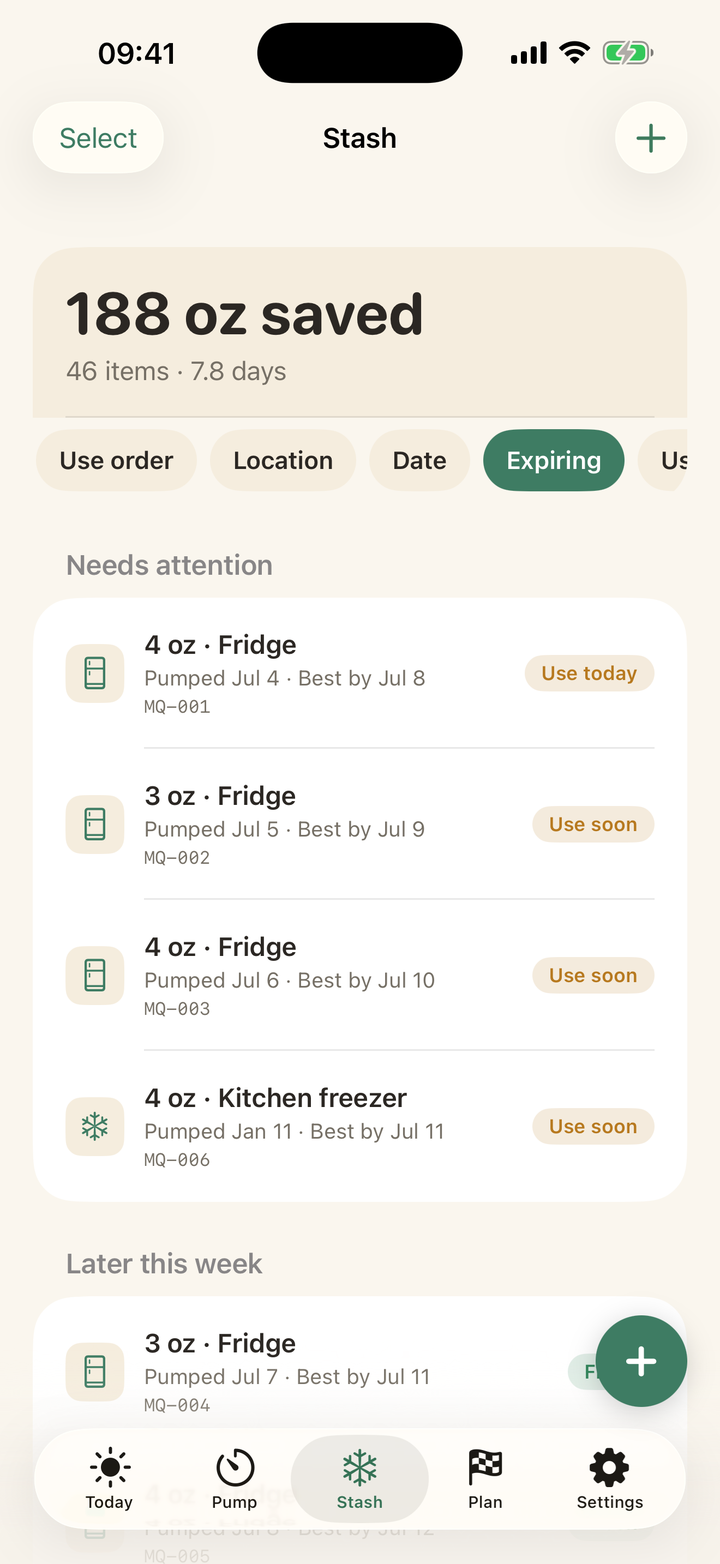
In Milk First
Every bag and bottle you add gets its best-by and use-by dates computed automatically from these exact rules, the oldest safe milk sits on top of the Use next queue, and a warning arrives the day before anything expires, while you can still act.
Milk First shows exactly how many days your stash covers and warns you before a single bag ages out, so the stash you build stays worth building.
Get Milk First free