Why your breast milk smells soapy (and why it is probably fine)
What lipase is and why yours might be enthusiastic
Lipase is an enzyme naturally present in breast milk whose job is breaking down fats so babies digest them easily. Some moms simply produce more of it. In the fridge or freezer, that fat breakdown continues and produces the telltale soapy, sometimes metallic smell after hours or days of storage. Fresh from the pump, the same milk smells completely normal.
Soapy vs spoiled: the smell test
- High lipase: soapy, metallic, or faintly fishy after storage. Milk was handled and stored correctly. Safe within storage windows.
- Spoiled: sour, rancid, genuinely foul, like milk gone bad. Usually means a storage rule was broken somewhere. Do not feed it.
The reliable tell: high-lipase smell shows up in milk stored properly and gets stronger with storage time, while spoilage follows a broken cold chain. If you know your dates and your milk was stored right, soapy means lipase.
If your baby refuses the taste
Plenty of babies drink high-lipase milk without blinking. If yours refuses it, the standard fix is scalding: heat freshly pumped milk to about 180°F, until tiny bubbles form at the pot's edge, then cool it quickly and store as usual. Scalding deactivates the lipase before it can work. It costs some of the milk's live immune components, which is why it is worth doing only if your baby actually refuses unscalded milk.
Test before you build a huge stash
The saddest high-lipase story is discovering it after freezing hundreds of ounces. Freeze one bag for a week, thaw it, smell it, offer it. Ten minutes of testing protects months of pumping. If you already have a soapy stash your baby refuses, try mixing thawed milk with fresh milk in increasing ratios; many babies accept the blend.
In Milk First
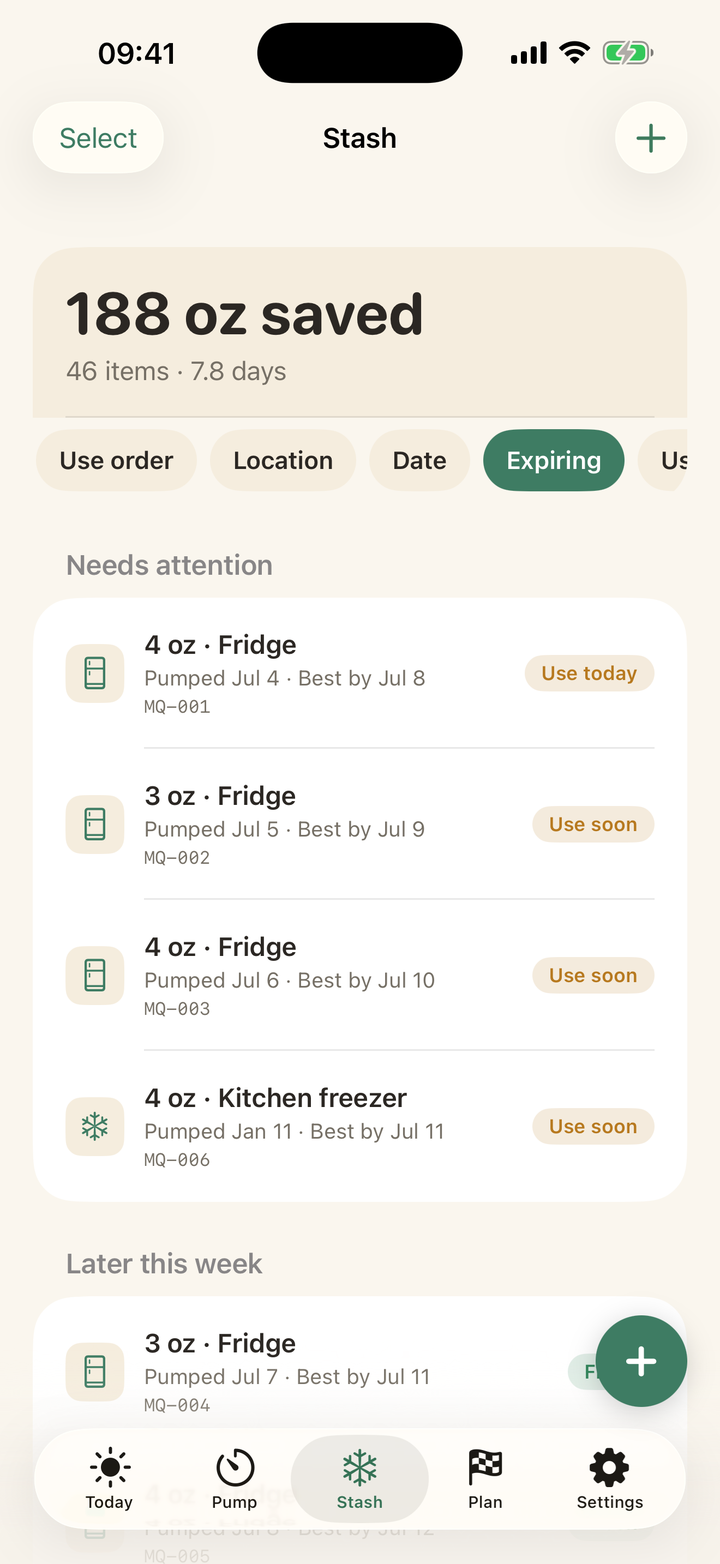
Every bag and bottle you add gets its best-by and use-by dates computed automatically from these exact rules, the oldest safe milk sits on top of the Use next queue, and a warning arrives the day before anything expires, while you can still act.
Milk First keeps your dates straight so a soapy smell never has to mean a guessing game about whether the milk was stored right.
Get Milk First free