Home › Guides › Quick question
quick answerHow to find your correct flange size
Quick answer: Measure your nipple diameter (just the nipple, not the areola) in millimeters after a pumping session, then add 2 to 4 mm. Many moms need different sizes per side, and most need smaller than the 24 mm that ships with pumps. Pain, rubbing, or an areola pulled deep into the tunnel means the fit is wrong.
The 60-second measurement
Use a ruler, printable sizing tool, or caliper. Measure across the base of the nipple in mm, ideally right after pumping when it is at working size. Nipple 17 mm? Try a 19 to 21 mm flange. Repeat per side; asymmetry is the norm, not the exception.
Signs your current size is wrong
- Pain, chafing, or blanching (white rings) during pumping
- Areola dragged into the tunnel, or nipple rubbing the sides
- Output that improves when you size down (very common) or up
- Nipple bouncing rather than gliding, a hint toward elastic tissue, where inserts or specific flange styles help
Flange fit is the highest-yield free-ish fix in pumping: a few dollars of silicone routinely buys ounces and ends pain moms assumed was mandatory.
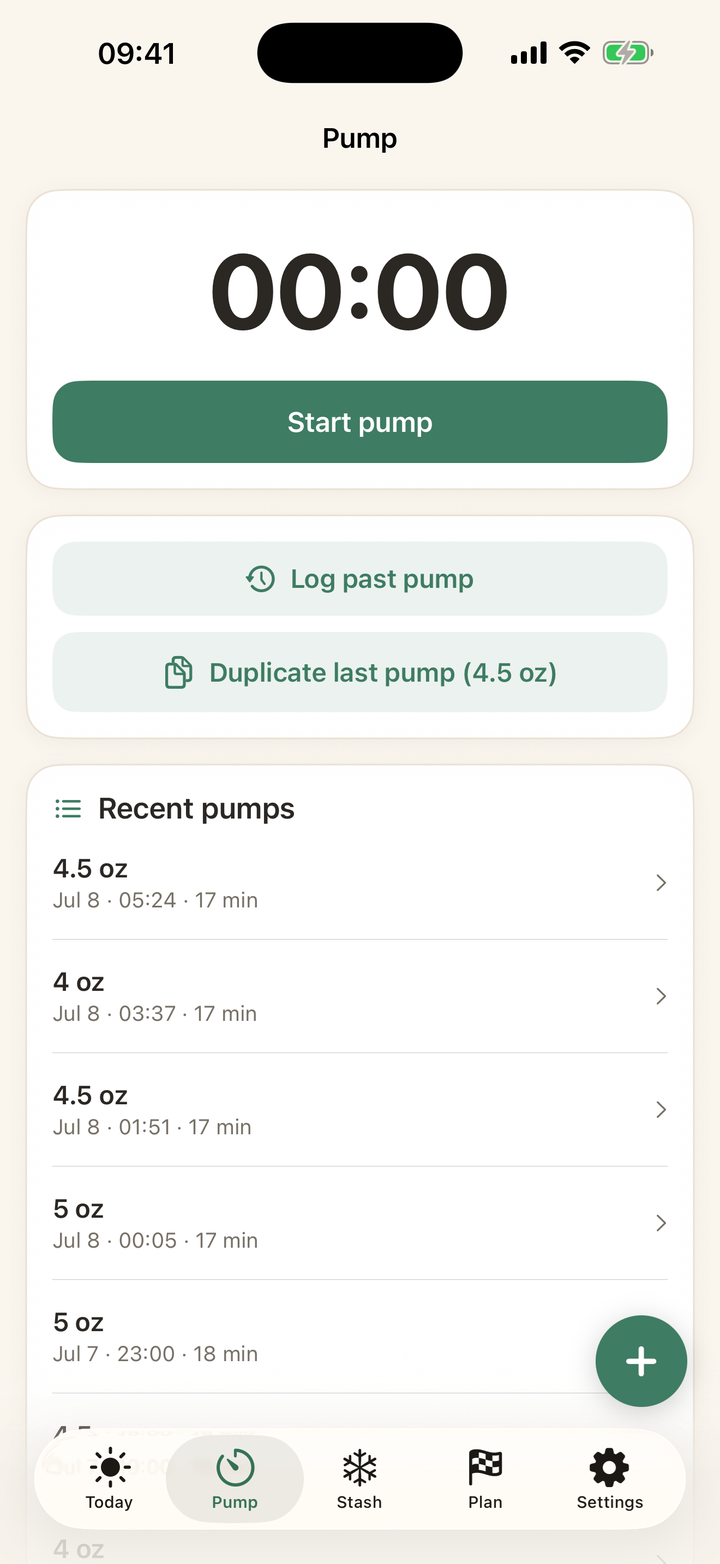
In Milk First
Log any session in two taps, backdate the ones you forgot, and let the 7-day average chart answer supply questions with real numbers. Every pump files its milk into the stash automatically.
Milk First charts your 7-day average automatically, so supply questions get answered with your real numbers instead of anxiety.
Get Milk First free