Home › Guides › Quick question
quick answerWhy did my pumping output suddenly drop?
Quick answer: Sudden drops are usually mechanical or hormonal, not true supply loss: worn duckbill valves or membranes, a stretched flange fit, returning period, ovulation, stress, a missed session, dehydration, or a baby in a growth spurt draining you before the pump. Check parts first; it is the most common and cheapest fix.
The checklist, in order of likelihood
- Valves and membranes: worn parts silently kill suction. Swap them first.
- Period or ovulation: hormone shifts commonly dip output for a few days; it returns.
- Missed or shortened sessions this week, including sleep-through nights.
- Stress and exhaustion: cortisol blunts letdown. Real, physiological, fixable-ish.
- Flange fit: size needs change postpartum; rubbing or pain means wrong size.
- Hydration and food: not magic, but real deficits show up in ounces.
- Pump motor fatigue on older or heavily used pumps.
- New medications, notably some decongestants and hormonal birth control.
When it is worth professional eyes
A drop that persists past two weeks with parts replaced and schedule restored earns an IBCLC visit. Bring your numbers; a real week-by-week log turns a vague worry into a solvable problem.
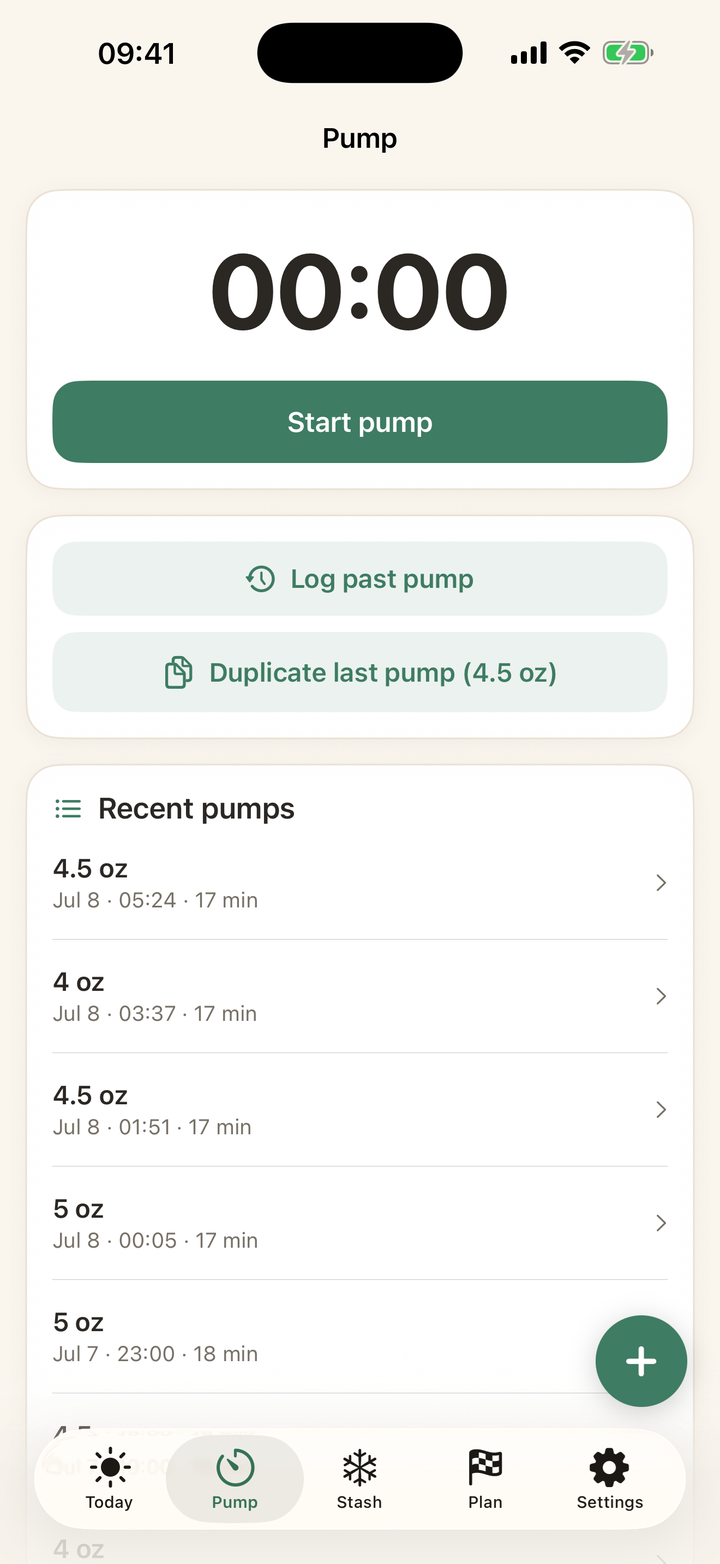
In Milk First
Log any session in two taps, backdate the ones you forgot, and let the 7-day average chart answer supply questions with real numbers. Every pump files its milk into the stash automatically.
Milk First charts your 7-day average automatically, so supply questions get answered with your real numbers instead of anxiety.
Get Milk First free