Power pumping, explained honestly
Why it works, when it works
Milk production runs on demand signals: breasts emptied often and thoroughly get told to make more. Cluster feeding, when babies feed in rapid bursts during growth spurts, is nature's power pump. The hour-long schedule fakes that burst. The emptier the breast repeatedly gets, the louder the signal.
The classic hour
- Pump 20 minutes
- Rest 10 minutes
- Pump 10 minutes
- Rest 10 minutes
- Pump 10 minutes
Replace one regular session with this, ideally in the morning when supply peaks, once per day for up to a week. During the rests, do nothing heroic: water, snack, phone. Expect the second and third pumps to yield little at first; the goal is the signal, not the ounces in the bottle that hour.
Honest expectations
Power pumping is a nudge, not a spell. Moms whose supply dipped from a skipped-session week or a stretch of stress often see it recover within 3 to 7 days. It cannot override too few total daily removals, a poorly fitting flange, or a worn-out pump valve, and it cannot push a body past its ceiling. If a week of consistent power pumping changes nothing, the higher-leverage move is a session with an IBCLC lactation consultant and a flange fit check.
Measure it like an experiment
Log your daily totals for the three days before you start, then daily through the week. Compare weekly averages, not single days. Without the before number, you will never know if it worked, and you deserve to know.
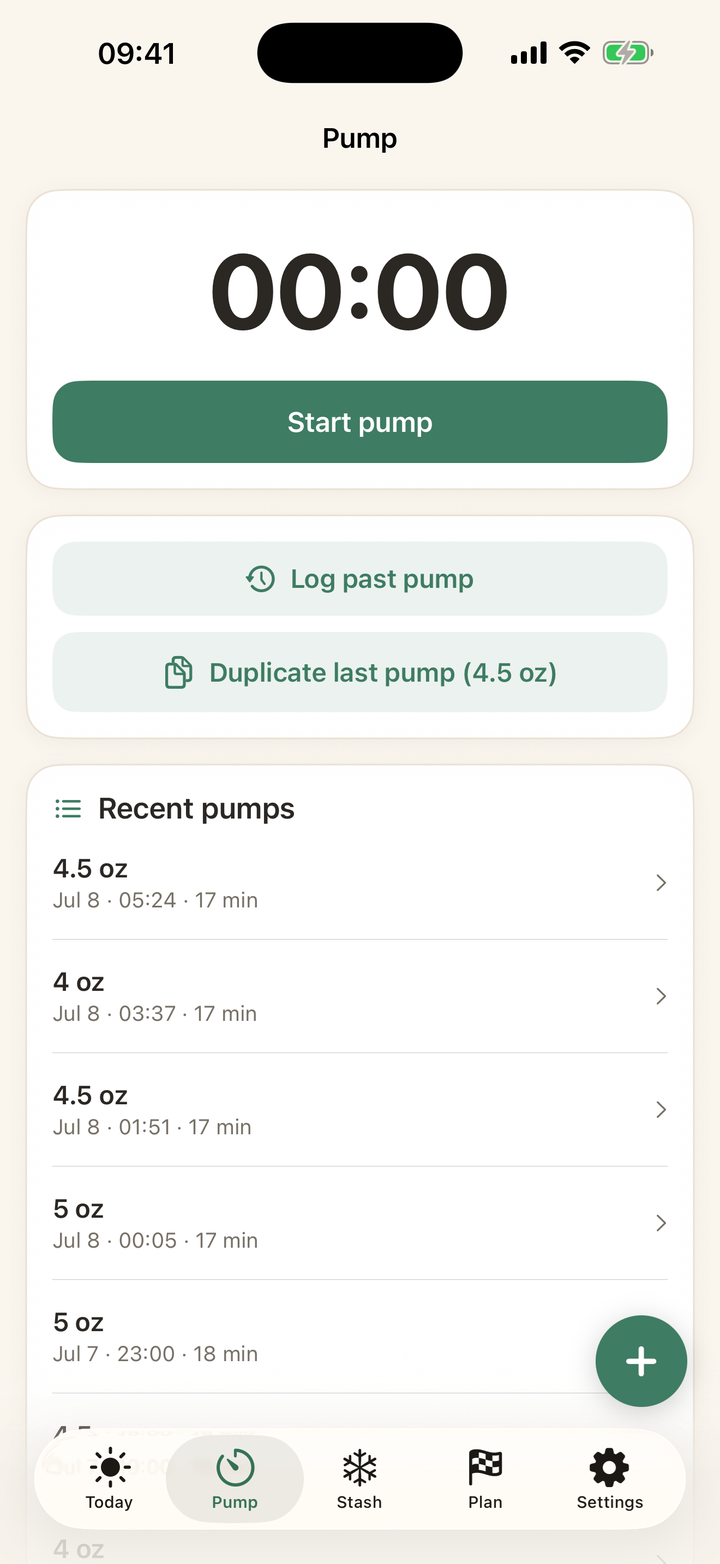
In Milk First
Log any session in two taps, backdate the ones you forgot, and let the 7-day average chart answer supply questions with real numbers. Every pump files its milk into the stash automatically.
Milk First charts your 7-day average automatically, so your power pumping week has a real before-and-after instead of a feeling.
Get Milk First free