Home › Guides › Quick question
quick answerPower pumping vs cluster pumping: what is the difference?
Choosing your weapon
Power pumping suits schedulers: same hour, same chair, headphones on, done in seven days. Cluster pumping suits parents already trapped under a cluster-feeding baby; add pump sessions between or after feeds through the witching hours. Physiologically they pull the same lever: repeated emptying in a tight window.
Measure or it did not happen
Log three baseline days, run one method for 5 to 7 days, compare weekly averages. A genuine response shows within a week; silence after a consistent week means the bottleneck is elsewhere: parts, fit, total daily removals, or simply a body at its ceiling, and an IBCLC beats another week of hour-long pumping.
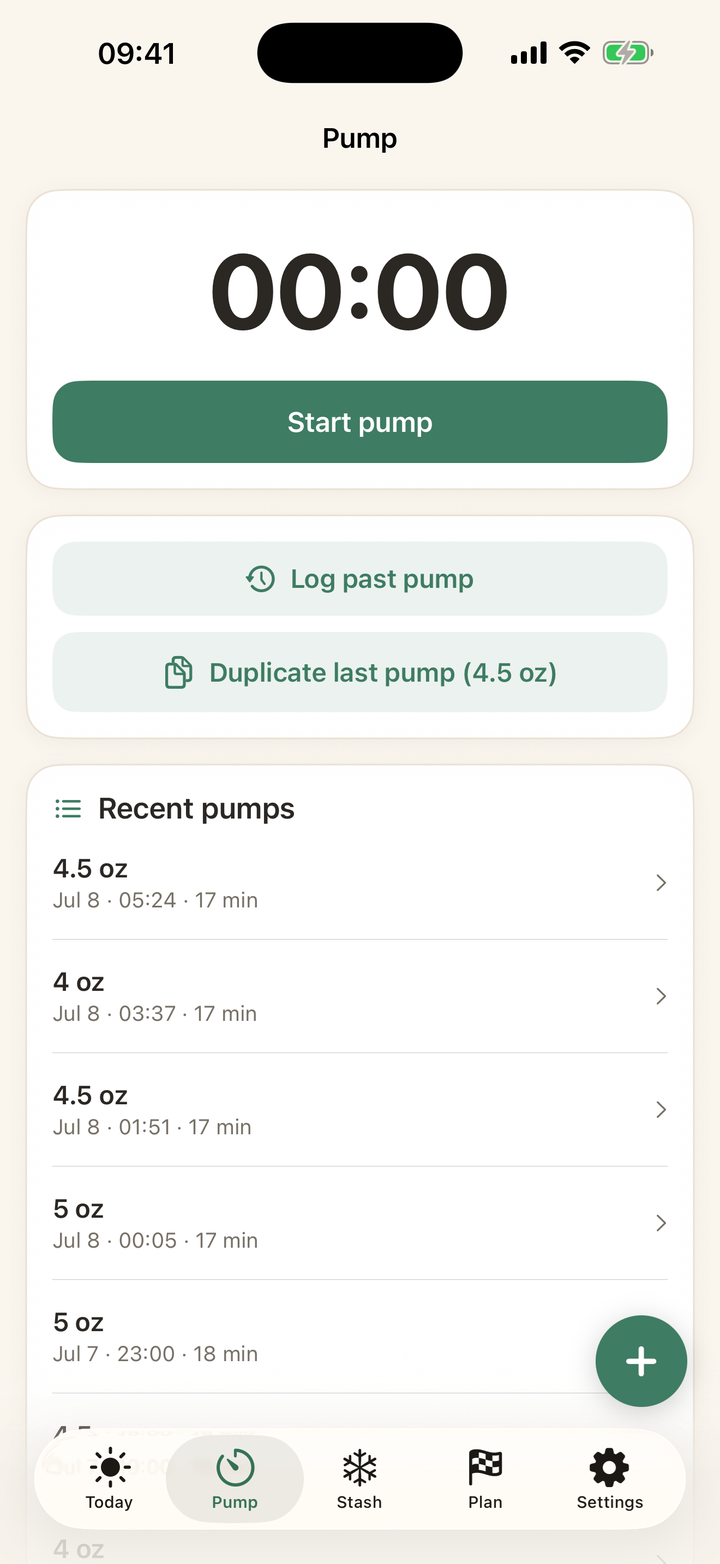
In Milk First
Log any session in two taps, backdate the ones you forgot, and let the 7-day average chart answer supply questions with real numbers. Every pump files its milk into the stash automatically.
Milk First charts your 7-day average automatically, so supply questions get answered with your real numbers instead of anxiety.
Get Milk First free